
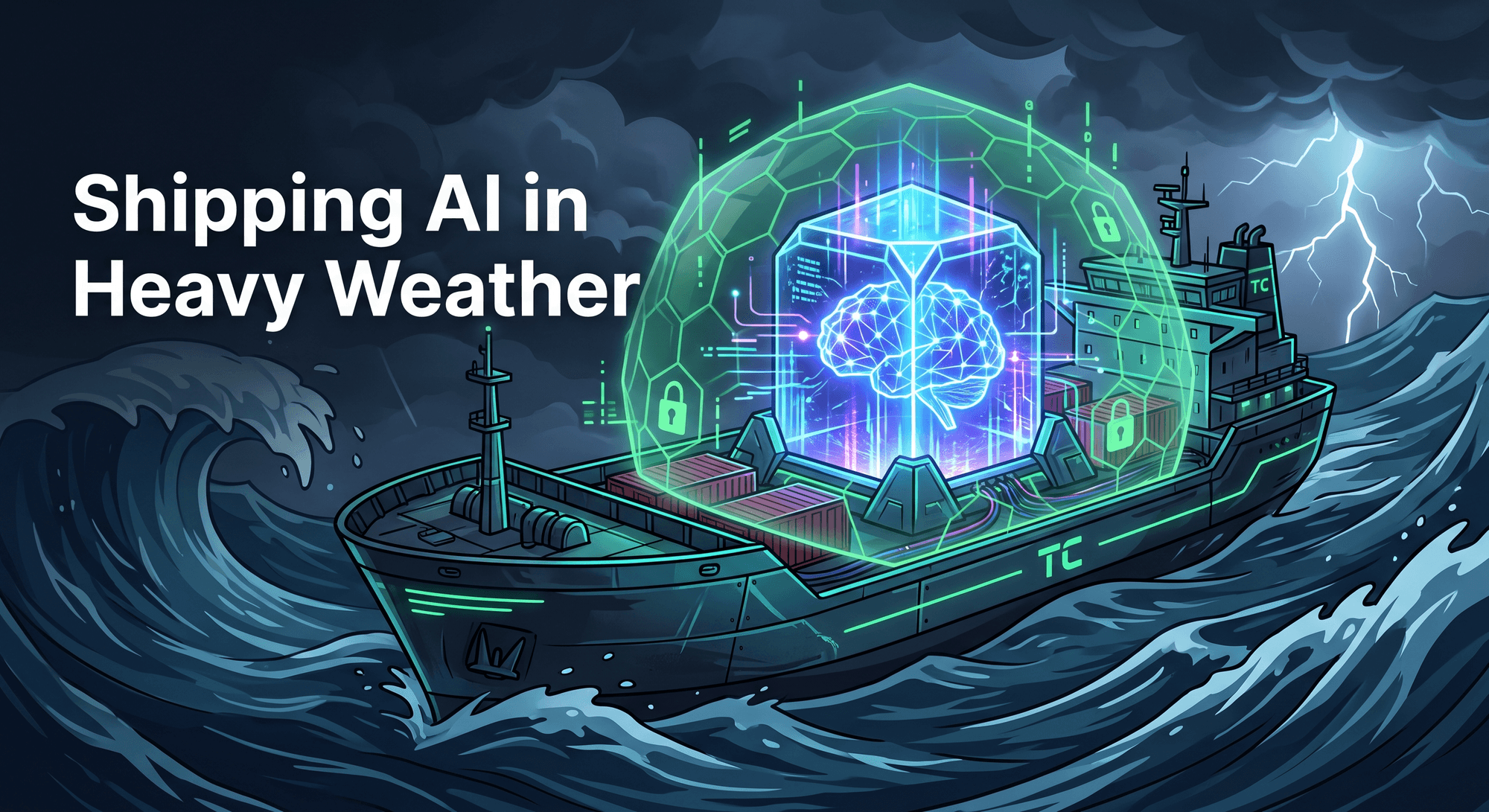
It has never been easier to build a flashy AI prototype. A few API calls, a bit of prompt engineering, and you have a seemingly intelligent copilot ready to demo. But when conditions get demanding—when you're building for healthcare,finance, or enterprise SaaS—that demo isn’t going to survive production.
At ThunderCoders®, we call this "engineering for heavy weather." True production AI requires more than just connecting to an LLM; it requires evals, access control, and stringent compliance designed into the delivery from day one.
Here is why your next AI initiative needs to treat SOC 2 and HIPAA readiness as foundational engineering features, not post-launch paperwork.
The AI Prototype Trap
The standard approach to integrating AI into a product usually involves spinning up an isolated proof-of-concept,showcasing the "magic," and then throwing it over the wall to the engineering and security teams to "make it compliant."
This creates a massive friction point. When security is an afterthought, teams are forced into a rigid freeze to retrofit audit logs, design access models, and map ePHI safeguards onto an architecture that was never built to handle them. We would rather ship a smaller, highly controlled assistant that can be rigorously reviewed than a flashy demo that cannot.
Embedding SOC 2 and HIPAA into the Build
A SOC 2 Type II report isn't just a document handed out by a CPA firm; it is earned by making identity, logging, and change control a natural byproduct of how your product already runs. The same applies to HIPAA-ready architecture.
If you're building a retrieval-backed assistant for care operations or a copilot for financial exceptions, compliance means:
- ePHI-Aware Architecture: Safeguards must exist natively in the cloud infrastructure and databases.
- Audit Logging by Default: Every suggestion the AI makes, the sources it pulled from, and the human that approved it must be persistently logged.
- Tightening PCI and ePHI Scope: Keeping the operational surface area restricted so that your LLM isn't freely accessing data it shouldn't be.
Readiness Designed Into Delivery
You shouldn't have one team that builds the product and another that inspects it months later. The same senior engineers who design your AI retrieval workflows should be designing the controls your auditor will eventually inspect.
By making evidence collection a side effect of shipping, SOC 2 and HIPAA stop being a side project. Controls show up in PRs and runbooks, not in a binder opened twice a year. This keeps production calm, allows your backlog to stay honest,and ensures your team can actually operate the system long after the handover.
The Takeaway
Conditions are demanding, and your engineering partner should be too. If you are preparing to deploy AI inside regulated products, don't wait for your buyers or assessors to ask hard questions. Build the safeguards first, then the model.
Are you building production software or AI under demanding timelines? Let's talk.